
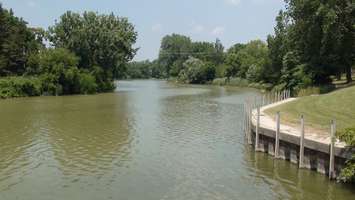
Efforts to cut the amounts of phosphorous getting into the Thames River are showing progress but still more needs to be done to protect Lakes St. Clair and Erie from algae blooms.
Karen Maaskant with the Upper Thames River Conservation Area says both agricultural and urban sources are declining but there are still problems.
"We are seeing decreases in phosphorous coming from the Thames River but we are seeing changes in flow patterns that are delivering large amounts of sediments and nutrients in the spring," she says.
Maaskant says increased flow patterns are partially the result of changing weather patterns and increased rainfall.
She says although phosphorous levels are falling there is more work to be done.
"Unfortunately right now they are looking for more progress," she says. "That's what everyone needs ot wrap their head around."
Maaskant says both rural and urban sources need to be reduced and for farmers that may well mean devising ways to keep rainwater on the land longer.
===
Maaskant says even though both agricultural and urban phosphorous sources are declining there are still problems.
[audio mp3="http://blackburnnews.com/wp-content/uploads/2015/10/MAASKANT-1.mp3"][/audio]
===
Maaskant says things are getting better - albeit slowly.
[audio mp3="http://blackburnnews.com/wp-content/uploads/2015/10/MAASKANT-2.mp3"][/audio]
===
Maaskant says phosphorous levels are declining - but climate change is aggravating the situation.
[audio mp3="http://blackburnnews.com/wp-content/uploads/2015/10/MAASKANT-4.mp3"][/audio]