
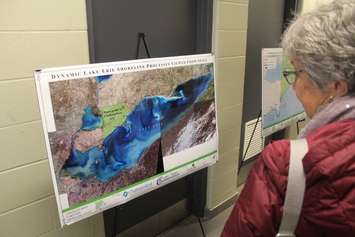
Several short-term and long-term options for addressing erosion and flooding concerns along the Lake Erie shoreline have been laid out in an in-depth report, which looks at historical data and projections related to climate change.
The Chatham-Kent Lake Erie Shoreline Study is available online for residents to read. The study was compiled by the Municipality of Chatham-Kent, the Lower Thames Valley Conservation Authority, Zuzek Inc., and Linda Mortsch from the University of Waterloo. The report will be presented to Chatham-Kent Council on May 4.
The study examined the costal vulnerability from Wheatley to the municipal boundary near Clearville. One area highlighted in the report as "immediate action" needed was Erie Shore Drive, which just recently reopened to local traffic in early April following a state of emergency.
"The path forward is unknown and complex, but priorities must be established, and solutions implemented. Also, the community must learn from the long history of inaction along Erie Shore Drive," read the study. "Coastal hazards do not go away, they just get more severe over time and more expensive to mitigate."
The flood risk to Erie Shore Drive and the Village of Erieau was looked at from different scenarios.
"A dike breach would flood over 500 hectares of interior farmland in the Burk Drainage Scheme and make Erieau Road inaccessible to vehicular traffic, thus isolating the Village of Erieau from emergency services outside the community," read the study.
On-going emergency repairs are being done to protect Erie Shore Drive, however, some adaption options have been detailed in the study but involve hefty price tags. Some of the protective concepts include dike reconstruction and a 50-year armour stone revetment, meant to protect the shoreline from further erosion. According to the study, the estimated cost of a 3.3 kilometre revetment ranges from $46.2 to $69.3-million.
However, as specified in the study's conclusion, not all options would be viable for government funding.
"Based on feedback received during consultations with senior levels of government, funding is not available for private shoreline protection," read the study. "However, there is an emerging emphasis on nature-based climate solutions that generate co-benefits for communities and increase resilience."
A couple of options that would fall in line with disaster mitigation and nature-based adaptation are identified as Option 2-4. It involves buying the property in the Burk Drain south of Erieau Road and ultimately restoring the coastal wetland at an approximate cost of $33.1 to $47.4-million. However, this option would also include the buyout and/ or relocation of homes along Erie Shore Drive. The assessed value in 2019 was approximately $20-million.
"By removing buildings, eliminating the agricultural land, and protecting Erieau Road from flooding, coastal risks are eliminated, emergency access to the Village of Erieau is protected, and more than 400 acres of new coastal wetlands are created," read the study.
If Erie Shore Drive is protected, some of the pressure may be lifted from Erieau Road as the roadway might not need to be elevated. However, as specified in the report, Erieau Road does face other challenges such as "flood-prone development along the bay shoreline".
Other areas that have been specified as vulnerable and require prioritizing include Talbot Trail, Rose Beach Line, and Rondeau barrier beach. Details regarding these areas and others within the municipality can be found here.
Further planning studies are recommended for the Wheatley Provincial Park Area, the Village of Erieau, and Shrewsbury.