
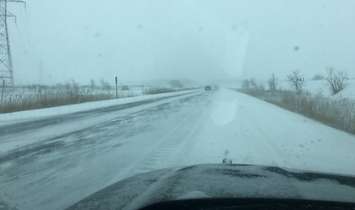
With a blast of winter weather set to hit the region, the Canadian Automobile Association (CAA) is offering tips to keep you safe while behind the wheel.
CAA South Central Ontario spokesperson Victoria Marchisello said it's imperative to keep an emergency roadside kit handy.
"This is so that in case something happens while out on the road, you'll have everything you need to stay safe until help arrives," said Marchisello. "An emergency kit can be in your vehicle all year round, but especially in the winter. You want to have items including a flashlight, extra batteries, warning devices, first aid kit, blankets, non-perishable food items, water and a phone charger."
Marchisello said a scraper, a small shovel, and a winter snow brush should also be accessible.
"Other things that you should do are check your car battery, check your tire pressure, and make sure your wiper blades and windshield washer fluid are topped up," said Marchisello. "You also want to make sure your gas tank is above that half full level. This is so that, in case of an emergency, you have enough gas to keep your car running and your heater on to stay warm. In those situations, you want to make sure that you crack a window open to have fresh air coming in. You'll also want to make sure your exhaust is not being blocked by snow or ice."
Marchisello said it's always a good idea to check on the current weather conditions before heading out.
"This is so you can plan your route accordingly and anticipate how long it's going to take to get to your location," she said. "Give yourself some extra time to get there. While out on the road, you want to leave plenty of space between you and the vehicles around you. Stopping distances do increase given the road conditions. You'll also want to stay on the main roads because back roads might not be plowed as quickly as main roads are. You'll want to avoid using overdrive or cruise control in your vehicle because you want as much care and control of your vehicle as possible."
Marchisello said on an average winter day, CAA responds to around 4,000 calls in the South Central Ontario region alone.
"That number can even double on a busy winter day," she said. "Many of our winter calls do include towing and winching, but we also see a lot of dead batteries. What many motorists might not know is the typical battery lasts about three to five years. A battery can actually lose its charge by 30 per cent with cold temperatures. If you do find that your car is slow to start, that can be a sign that your battery is reaching the end of its life. It's best to check on that before leaving home so you're not experiencing a dead battery out on the road."
CAA has over seven million members, and over 100 offices across Canada.
Members can call 1-800-CAA-HELP (1-800-222-4357) throughout Canada and the U.S.
They can also dial *CAA (222) toll free from a cell phone or request assistance online at caasco.com/roadservice.