

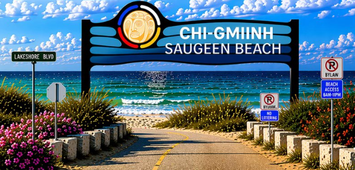
Saugeen First Nation is taking another step in reshaping the identity of its shoreline, with a community-selected design set to become the new permanent sign at Saugeen Beach.
The Beach Advisory Committee announced last week that a concept created by Jeannette Ladd has been chosen through a community vote, following weeks of submissions and input. The design, which features the wording "Chi-Gmiinh Saugeen Beach," will eventually replace the current temporary signage at the end of Main Street.
Chief Conrad Ritchie said the new sign represents more than just a visual update.
"It reaffirms what our elders and many leaders of the past have always lobbied and advocated for," Ritchie said. "It’s also acknowledging and correcting a part of history...and educating the general public that there is a presence of the Anishinaabe here."
The winning design stood out for its modern look and cultural elements, including the use of traditional colours, Ritchie added, noting it reflects both the community and the lakeshore setting.
The project builds on momentum following a lengthy legal battle over beach ownership, which was ultimately settled in Saugeen First Nation’s favour through the courts. A temporary sign installed in 2025 marked that change, but this latest step moves toward a more permanent and community-driven expression of identity.
Ritchie said the sign is also part of a broader effort to increase awareness of Saugeen’s treaty territory.
"It’s about creating opportunities...to educate the general public when they’re coming into Saugeen territory," he said. "If we leave it to others to tell our story, then they’re telling a different narrative. This is an opportunity for us to do that."
Installation of the new sign is still months away. The design must be finalized before moving through production, engineering, and installation, with leadership continuing to guide the process following community input.
While the beach renaming and signage changes have sparked mixed reactions in the wider community, Ritchie stated leadership is focused on setting the tone moving forward.
"As leaders, we have a responsibility to role model how we respond to change," he said. "All people need to feel safe...whether you’re Indigenous or non-Indigenous."
Beyond the sign, Ritchie added more changes could be coming to the beachfront, including future tourism and infrastructure plans, though those will roll out gradually.
For now, the focus remains on a symbol he hopes will bring both clarity and connection.
"It’s a step towards educating the general public," he said. "And creating that sense of togetherness."