
The mother of one of America's most notorious school shooters is calling for better suicide prevention in schools.
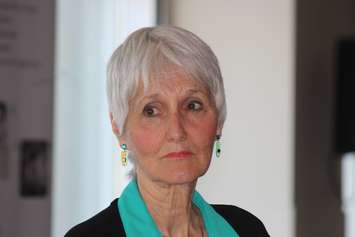
Sue Klebold spoke at the Canadian Mental Health Associations' Breakfast of Champions event at the St. Clair Centre for the Arts in Windsor Tuesday morning.
Her son, Dylan and a friend Eric Harris shot 13 students and staff to death at Columbine High School in Littleton, Colorado in 1999. The two then turned the guns on themselves. The shooting was at that time the deadliest in American history.
Klebold says there were signs her son was suffering from depression before the shooting, and she regrets having not paid greater attention to them. Now, she is urging parents, mental health providers, and especially schools to do better.
"I truly believe that if Dylan had been able to address that suicidality that he was experiencing that we could have interrupted this," she says. "It might not have stopped the shootings. Eric might have done something without Dylan, but I believe that his participation wouldn't have happened."
Klebold says she continues to live in the same community as the Harris family, even occasionally running into them at the grocery store. She says their relationship is not close, but cordial. The Harris family and the rest of the Klebold family have chosen not to speak publicly about their experiences in the aftermath of the shooting.
Klebold, however, has not remained silent. She has released a book about her experiences called, "A Mother's Reckoning." She is currently on a book tour across North America.
Asked if society, and the media, in particular, need to practice greater compassion towards the families of shooters, Klebold was diplomatic.
"Should is a tough word," she says. "I would love for all of us to be more sensitive to all of our needs. We have a tendency sort of write people off, dehumanize them, put them in a category, this is a perpetrator, this is a victim. I believe that family members of perpetrators of crimes are also victims of that crime. And, I would never have even thought of that if I hadn't been through it myself."
Klebold says she has not reached out to other families affected by school violence the way her's was. She says she respects their privacy, noting that after Columbine she wanted to hide away. She also has not contacted the survivors of the Parkland, Florida shooting this past February, although she applauds their courage as they pursue a change in U.S. gun laws.
"Anything we can do to put some distance between a troubled person and a firearm is the right thing to do," says Klebold with a caveat. "We can't discriminate either. We can't say 'oh because you have a mental illness you can't own a gun.'"