

As a cyclospora outbreak continues to sicken people across the border in the U.S., the Ontario Greenhouse Vegetable Growers (OGVG) is reassuring consumers here.
"Consumers can be confident in the safety of Ontario greenhouse vegetables," said Executive Director Richard Lee. "Our growers operate under some of the most rigorous food safety and regulatory requirements in North America and are committed every day to producing safe, high-quality food."
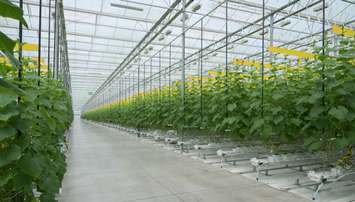
Tomatoes, peppers, and cucumbers are grown indoors, limiting exposure to many sources of contamination found in outdoor production. Crops are grown without contact with open soil, and are protected from rain, runoff, wildlife, and other sources of contamination.
On top of that, commercial greenhouse vegetable growers undergo annual food safety audits, conducted by independent, third-party auditors. Growers must comply with rigorous standards for sanitation, employee hygiene, water quality management, facility controls, record keeping, and traceability.
"Food safety is a shared responsibility from the greenhouse to the table," said Lee.
Some of that responsibility also lies with consumers. The OGVG encourages them to follow safe food practices at home, including washing hands before handling food, rinsing fresh fruits and vegetables, and following public health advisories and food recall notices.
On Thursday, Michigan state officials said new cyclosporiasis cases are on the decline.
According to CNN, the state has reported 12,485 cases, including 279 people who required hospitalization, and two deaths. They were sickened after eating lettuce supplied by Taylor Farms. The outbreak was traced back to the company's operations in Mexico.
The Centres for Disease Control and Prevention has identified 22,700 cases of cyclosporiasis so far this season. Another 12,200 cases are being confirmed by laboratory testing.