
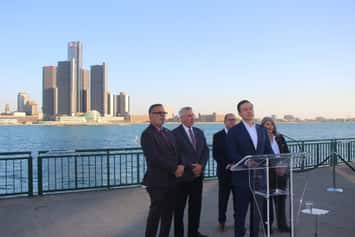
Conservative Leader Pierre Poilievre pulled up to Dieppe Gardens on Windsor's riverfront Tuesday morning in a Windsor-built Chrysler Pacifica ahead of meetings in Detroit, where he'll continue to pitch a new auto pact.
Poilievre was in Windsor back in March too for similar meetings in the U.S., but he told reporters the environment has changed dramatically since then.
"The situation is much more dire. Back in March we thought we were going to imminently have a deal. Since that time, there has been no deal. The tariffs have worsened, and now there's the threat of a massive tariff increase on January 1," said Poilievre. "Those threats are already paralyzing investments on the Canadian side of the border."
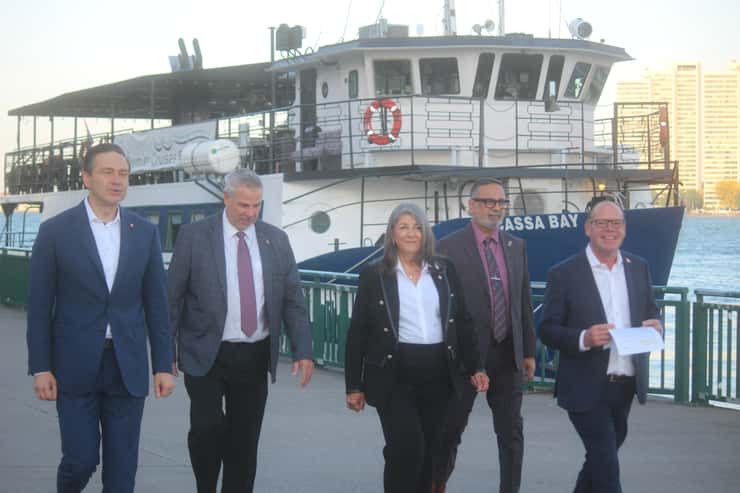
Conservative MPs Kathy Borrelli, Chris Lewis, Harb Gill and David Epp will join Poilievre at meetings with officials at the International Brotherhood of Electrical Workers, General Motors, and the Ford Rouge Complex.
Poilievre again pitched that a Conservative government would incentivize and lower the price of a new vehicle made in Canada by removing the GST.
"Make it easier to buy Canadian. We as Conservatives are proposing to take the GST off Canadian-made automobiles, which would reduce the cost of a Canadian-made car in Canada by five per cent," said Poilievre, adding that it would incentivise the production of 30,000 more vehicles in this country."
He also proposed removing subsidies to buy electric vehicles and removing "the backdoor" EV mandate.
Poilievre noted that for every ten vehicles made in Canada, nine are sold in the U.S. He said an auto pact could reverse declines in auto production since 2015.
The auto pact, as proposed by the Conservative Leader, would allow Canada and the U.S. to produce more vehicles without tariffs.
"The more an automaker produces in Canada, the more it can sell in Canada. The more it makes in the U.S., the more it could sell in the U.S.," said Poilievre. "For Canada, that would mean production could grow by 500- to 800,000 automobiles over the next ten years."
While Poilievre continued to criticize the Carney Liberals for their handling of the trade war on this side of the border, he pledged to back them on the U.S. side.
"That means putting country ahead of party, and that is what Conservatives will do," he pledged.