

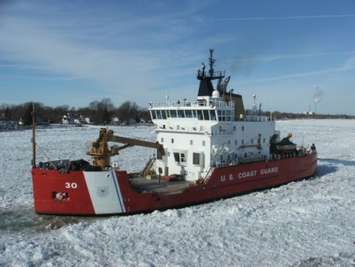
Ice cover on the Great Lakes was at near record levels this year and lasted long enough that ice breaking operations were only declared finished this week.
U.S. Coast Guard Director of Vessel Traffic Services Mark Gill says the American and Canadian coast guards work together to keep ships moving, and this year they had a challenge.
"Ice coverage peaked at roughly 89% for the Great Lakes a little bit below record setting but certainly what we would call a severe winter," he says. "In a severe winter, normal transit speeds are generally cut in half so you have greater burden in delivering the commodities that go towards winter production and power generation."
Gill says officials sometimes have to set priorities, giving extra attention to a load of salt if supplies to keep roads clear are running low, or coal, if a power generator is in short supply.