
If you in manufacturing and wonder what talks to renegotiate the North American Free Trade Agreement will mean for your job, you might be worried about the lack of progress. You would not be alone.
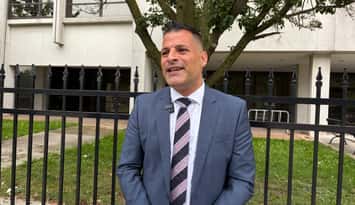
The director of the Cross Border Institute at the University of Windsor has been watching the talks too, and Bill Anderson says if the United States wants a deal by the end of the year, it should communicate exactly what it wants.
 Huron Church Rd. (Photo by Jason Viau)
"I think the only way this could come to a deal at the end of the year, is if you were to identify three or four real, real tough issues -- get those resolved, and say that's it," he says.
As round three wrapped up in Ottawa, Foreign Trade Minister Chrystia Freeland and Mexican Secretary of Economy Ildefonso Guajardo said progress is being made. They say the three parties have made advances in digital trade, telecommunications, regulatory practices, and trade facilitation. However, American trade negotiator Robert Lighthizer still has yet to issue specific language on key issues including rules of origin.
Anderson admits it makes him nervous to see an issue that potentially could affect manufacturing in southwestern Ontario so deeply, go unaddressed.
"The rules of origin mean how do you define whether a product qualifies for tariff-free treatment within the free trade area. Normally, it's defined on what percentage of that product was produced in one of those three countries," says Anderson. "The United States says it wants to be able to specify that a certain percentage be produced in the United States, not just the NAFTA region.
"First of all it's a dangerous precedent, and I don't think the other two countries want to go down that route," he continues. "It's also much more complicated than they thought it was originally. I think they're starting to realize that it's not that easy to propose language that can't actually turn out to be self-injurious to U.S. industry."
While Unifor and Teamsters Canada accused the U.S. of stonewalling progress on labour standards, Anderson is not surprised Lighthizer is dismissing it. He believes Canada's proposal would be unworkable because it targets Right to Work states.
"It's a state's rights [issue]. Even Democrats that would agree we shouldn't have this Right to Work would object to the Senate making a law," he says. "Even if the Trump administration agrees with Canada and Mexico, the United States Senate would turn it down."
 © Can Stock Photo / rabbit75can
As for whether Lighthizer will walk away from the table before the deal is complete, Anderson fears at this point; it is more likely Guajardo will.
"They'll walk because of the fact that they have presidential elections coming up next year, and the party that is currently in power cannot be seen to be too subservient to the United States," he says. "Mexico can lose a great deal by getting out of NAFTA but if they get out of NAFTA you can still make cars in Mexico and ship them to the United States, you just have to pay the tariff."
Canada has in the past also threatened to walk if the U.S. sticks to its proposal to dismantle Chapter 19, the process to settle trade disputes and allegations of illegal subsidies. Canada has won many of the disputes it has taken to the binational panel.
In August, Anderson expressed concern about the Canadian proposal to open up further the flow of professionals across the border. So far, there has been no progress on that issue either.
Four days have been set aside for round four of negotiations in Washington starting October 11. Seven rounds are planned.