

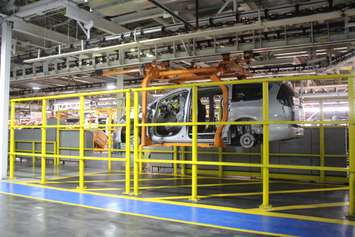
According to a survey by KPMG, six in ten Canadians plan to buy a vehicle in the next five years, and many prospective buyers aren't just paying attention to the model, but also where that vehicle was made.
The survey of 2,000 Canadians, taken between November 7 and November 17, suggests that 72 per cent believe it is either very or somewhat important to them that the vehicle is assembled or built in Canada.
"With U.S. tariffs disrupting the industry, Canadians in the market for a new vehicle are looking to the brands they trust at prices they can afford -- and increasingly, where those vehicles are built," said Partner and National Automotive Sector Leader at KMPG Canada, Dave Power. "Car buyers are looking for vehicles that meet their lifestyle, are affordable, and have a positive economic impact on the country. It's not surprising that Toyota and Honda, which each have a large manufacturing presence in Ontario, resonate most with Canadian consumers."

At the same time, Power said trust in the Detroit Big 3 is eroding as Canadians perceive a lack of commitment to keep jobs in Canada.
"As consumer concerns collide with ongoing trade tensions and tariffs threatening to upend decades of cross-border stability, Canada's automotive sector needs to carefully consider its future and what changes might be warranted," continued Power. "Canadians are calling for a new automotive strategy, which prioritizes domestic manufacturing, secures jobs, provides long-term resilience, and positions Canada as a leader in electric vehicles and battery production."
A majority of respondents stated they would support higher tariffs on Detroit 3 automakers who cut production in Canada.
Fifty-five per cent of those who responded to KPMG's survey believe Canada could become a world leader in electric vehicles, in a bid to reduce its reliance on the U.S. auto industry. Almost as many think governments should make it a priority.
"And with billions already committed to new battery and EV charging facilities in Ontario and Quebec, momentum is building toward a made-in-Canada ecosystem for cleantech exports in renewable energy, EVs, and electrification," added Power. "We have everything to lead the EV transition, including critical minerals, innovation, talent, and manufacturing capacity. What is needed is a clear roadmap to accelerate Canada's leadership."
The survey shows 60 per cent think governments should provide financial support and incentives to keep automakers building in Canada. Thirty-seven per cent said it should support jobs and production specifically in Canada's auto parts industry. Only seven per cent think jobs and production among Detroit automakers should be prioritized. Almost half of the respondents support removing tariffs on EVs from China.
More than half, 58 per cent, also supported diversification of auto manufacturing into defence manufacturing to save jobs.
"People want long-term strategy, not short-term patches," said Power. "Canadians are calling for strategic investments that safeguard manufacturing jobs while strengthening the foundation for the entire automotive ecosystem."
The survey also asked Canadians about next year's review of the Canada-U.S.-Mexico Agreement. Seventy-two per cent fear vehicle prices will rise if Canada loses protections under the new agreement, while 51 per cent don't think Canada's automotive industry will survive without trade protections or a new trade agreement with the U.S.
KPMG's Partner, Trade and Customs, believes the review may also provide manufacturers with opportunities.
"If the CUSMA rules of origin change substantially to require even more North American content, this could have a dramatic impact on existing automotive supply chains," Joy Nott said. "This disruption would require a search for new North American suppliers to replace overseas manufacturing. While disruptive and likely to increase costs, this change could also create opportunities for Canadian manufacturers to expand and diversify their business."
Meanwhile, 55 per cent of Canadians in the market for a new vehicle plan to buy an environmentally-friendly car next. Thirty-three per cent plan to buy a hybrid, 11 per cent want a plug-in hybrid next, and 11 per cent are considering a fully electric vehicle.