
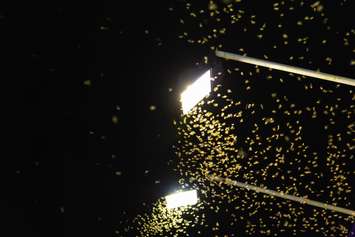
While many in the community dread mayfly season, the Essex Region Conservation Authority says it's actually a sign of good water quality in the Great Lakes Region.
Mayflies, also known as fish flies, live most of their lives as larvae, burrowed in lake and river sediments.
“Their presence tells us that parts of our lake and river systems are supporting the oxygen levels and habitat conditions these aquatic insects need. They also provide an important food source for fish and birds throughout the region,” said Katie Stammler, Water Quality Scientist for ERCA.
The fish flies come out of the lake as adults, living only 48 hours to mate and lay eggs.
"Mayflies are often described as biological indicators because their presence reflects conditions in the water and sediments where they develop,” said Stammler explains. “Healthy populations require suitable temperatures, adequate dissolved oxygen and sediments that are not severely degraded by pollution. When bottom waters lack oxygen or sediments are heavily contaminated, fish fly larvae can decline or disappear.”
Stammler indicated the season typically only lasts a few weeks.
“The best response is to recognize that mayflies are around for a short time each year and a long-term reminder of why water quality protection matters,” said Stammler. “Every action that reduces runoff and protects shoreline habitat helps strengthen the health of Lake Erie and the waters that define the Essex region.”
She recommends reducing unnecessary outdoor light during peak emergence to reduce the number around your property.