
Did I hear right? After years of debate of appeals and negotiations Canada appears to have won a trade dispute with the United States.
[audio wav="http://blackburnnews.com/wp-content/uploads/2015/05/May-21-Comment.wav"][/audio]
Well Canada and Mexico seem to have won and after all this time the word "seem" may be the operative one.
The dispute is the Country Of Origin Labeling laws which require meat processors in the United States to state whether that steak, chop or chicken leg came from a Mexican, or Canadian farm or was a product of the U.S.A.
The two countries, Canada and Mexico filed a complaint with the World Trade Organization and after years of hearings and appeals, all due process by the way, the complaint was upheld and the two countries after the final appeals were dismissed prepared to impose trade sanctions against the U.S.
So the U. S. to the surprise of many, has started dismantling its Country Of Origin Labeling requirements .
What's the big deal anyway?
On the surface it seems like a no-brainer. We all want local food if at all possible convenient and not any more expensive, and who can blame someone in Montana from wanting what is local to him or her for the weekend barbecue than someone in Ontario. So why not let them?
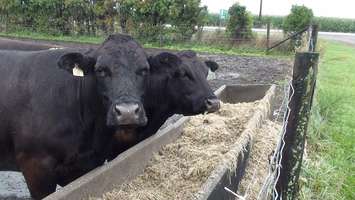
It is complicated. In part because the definition of where an animal is from is open to question. Is a calf born in Ontario and sold south at six months old then raised to market weight in the U.S. as Canadian as a steer shipped south for a final few weeks of fattening before slaughter?
The way the law was laid out, no they are not equal and have to be labelled differently.
Another twist, animals born in the U.S. fattened in Canada, still different labeling.
Complicating matters even more there were processing companies in the United States that decided they couldn't rely on ear tags to tell the difference so they insisted the only way to process non-American cattle was to clear out the entire inventory, ship in Canadian animals, process them all and then start again on the American side of the border.
This they deemed too complicated so they just stopped accepting Canadian product.
Small wonder the farm groups north and south of the United States cried foul.
The interesting thing is that the United States has finally accepted the World Trade Organization ruling. A lot of people thought that wasn't going to happen. A lot of people thought the U.S. would take part in or just ignore a trade war of rising sanctions that arguably would hurt Canada as much as the U.S.
Is this the end of the dispute?
Nobody knows what the future will bring, but it might be. You see while there are groups in the United States urging the government to press on, to try and find other ways to keep labeling laws in place, some lobby groups say following the laws was expensive and cost them just as much as it cost Canadian farmers.
You don't get the impression that the big meat processers, packers and grocery chains will mourn the end of the American Country Of Origin Laws all that much.
Maybe that is the real reason the American government seems poised to let them expire quietly.