

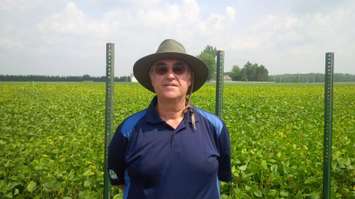
An OMAFRA Field Crop Plant Pathologist says the main objective of open houses like the one held this week near Blyth is to educate farmers about the impact of the new Pollinator Health regulations.
Albert Tenuta explains farmers still have a number of options under the new regulations.
That includes using baiting or a scouting/digging technique to determine whether the wireworm or grub risk is enough to trigger the need for neonicotinoid pesticides.
But he points out if they're planting fungicide-only treated seed they don't have to do any reporting.
If there is a need for the pesticide, based on past history or fields deemed to be at higher risk, farmers can put neonic treated corn or soybean seeds on fifty per cent of those acres.
But Tenuta says many farmers aren't aware that the legislation only covers corn and soy beans.
If they're planting something else, he says they're not affected by the new legislation.
Tenuta says wheat, forages, dry beans, edible beans and seed production are not covered by the new rules.
===
Tenuta says if they're planting corn or soybeans, growers need to test for things like wire worms or grubs.
[audio mp3="http://blackburnnews.com/wp-content/uploads/2015/09/TENUTA-Neonics-1.mp3"][/audio]
===
Tenuta says one of the most important things farmers should know is that the new regulations do not apply to all crops.
[audio mp3="http://blackburnnews.com/wp-content/uploads/2015/09/TENUTA-Neonics-2.mp3"][/audio]