

In the lastest Ontario Field Crop Report, the delay in growing degree day accumulation and crop maturity has many fields in the ideal growth stages that puts them at risk of some of later season pests and diseases.
Peak moth flight for western bean cutworm has passed for all regions of the province. Peak egg laying follows shortly after peak moth flight. Fields in southern Ontario should be scouted for egg masses and larval activity. An insecticide application is warranted if thresholds are reached and there are still fresh silks present on the ears. Dry beans also should be scouted now that pods are present.
First generation bean leaf beetle adults are a concern in food grade, Identity Preserved (IP), seed soybeans and edible beans across Ontario this time of year. Bean leaf beetle can cause defoliation but rarely does leaf feeding reach threshold and impact yield. The real risk is the pod feeding they can do, as the holes open the pods up to the development of pod diseases, impacting seed quality.
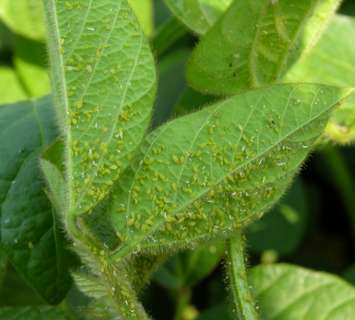
Soybean aphids are reaching thresholds in some fields, particularly in eastern Ontario. The milder weather is ideal for aphid development, though hopefully with the dewy mornings, some entomopathogens will start to develop. Fields are at risk until the early R6 stage of soybeans when more aphids are needed before control is warranted and pre-harvest intervals become a concern.
White mould symptoms are showing up in many soybean and dry edible bean fields in the province. It is still early to assess the impact that infection can have on yield but research has shown fungicide applications beyond the R4 soybean stage do not limit further disease development. In addition to causing yield loss, white mould can affect seed quality and seed production.