

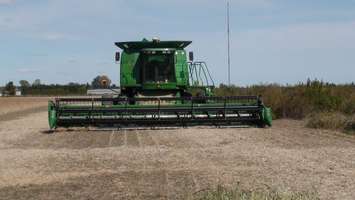
Despite some exemptions for Ontario farmers regarding the new federally imposed carbon tax, producers are still expecting to feel a pinch in their wallets when it comes to transporting goods and drying grains.
The new carbon charge came into effect April 1 in Ontario and three other provinces after they refused to impose their own price on carbon emissions. The tax means a slight increase in the cost of gasoline, diesel, and natural gas.
Although fuel used in farm equipment is exempt from the tax, Louis Roesch, Zone One director with the Ontario Federation of Agriculture, said it does not cover costs associated with the transportation of commodities.
"It depends on how many times it's loaded and unloaded... You have to send it to a processing plant, from a processing plant it has to end up at the grocery store somehow so it's kind of a spiral. It just continues to be adding up," he said.
Roesch also mentioned that producers who use grain dryers -- which run on propane -- will also be affected.
"At five cents a litre right now, that's roughly a 10 per cent increase on drying charges," he said. "Each dryer is going to cost the same, it depends on how many bushels are going to dry but at the same time, it's going to affect most of your bushels at the same rate across the board. It just depends on how many acres you're growing and how long it takes you to dry it."
Although the federal government has said that the tax will encourage people to drive fuel-efficient vehicles, Roesch said that's not exactly a viable option for most.
"That's a huge expense," he said. "You don't just go out and buy another autonomous vehicle or something like that that's going to burn a lot less fuel and park what you have... that's just not doable in most cases."
The Ontario Federation of Agriculture is recommending that farmers keep records of fuel purchased and keep logs of the mileage on their vehicles. Details in regards to farm business can be found at the OFA's website.
-With files from Cheryl Johnstone