
Starting at midnight Tuesday, anyone returning to Canada had better have an acceptable quarantine plan, or the federal government will impose one.
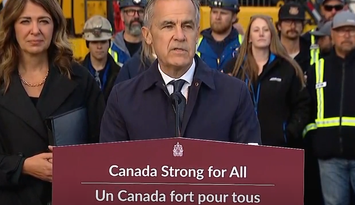
Prime Minister Justin Trudeau announced strengthened measures under the Quarantine Act during his daily briefing with reporters.
"Now, if asymptomatic travellers can not explain a credible quarantine plan, they will be required to quarantine in a hotel," he said.
It was not clear if the stay would be at the travellers' expense.
It would be up to border officials to decide if the quarantine plan is inadequate, but Trudeau did offer a few examples.
"If their plan is to go stay in a place where there are many elderly family members at risk of COVID-19," he suggested. "Whether they don't have a set destination, if they've been outside of the country for many years."
Trudeau also responded to repeated questions about the rise in confirmed cases and deaths in the nation's long-term care homes. Regulating long-term care homes is under provincial jurisdiction. However, Trudeau hinted the federal government might be willing to participate in any provincial plans to top up the salaries of long-term care home workers who had lost income when they were restricted from working at multiple facilities.
The Prime Minister said he knows more long-term care workers will be needed, and his government is working with the provinces on solutions.
In the U.S., there has been much speculation about when that country will reopen its economy. Trudeau told reporters his government is having those discussions with the provinces too, but the return to normalcy is still weeks away.
"We will have to do it in phases," Trudeau explained. "We will have to remain vigilant until such a point a vaccine against COVID-19 is found."
Much of those discussions are about coordinating federal and provincial timelines.
Recognizing Canada's economy is intertwined with that of the U.S., and the rising number of COVID-19 cases across the border complicates any economic restart. There are currently more than 600,000 confirmed cases in the U.S., and Trudeau offered no timeline for reopening the border to non-essential travel.
"We recognize that travel restrictions are going to remain extremely important -- and we're going to continue to work with the Americans and people around the world to ensure that we continue with these restrictions," said Trudeau.
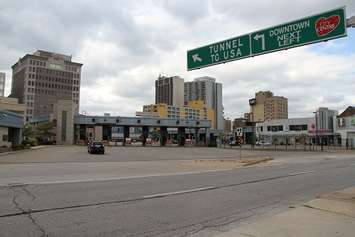
The border closed to all but essential traffic on March 21, but the 30-day order expires April 19.