

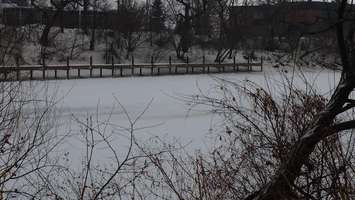
The Lower Thames Valley Conservation Authority (LTVCA) says there's an increased risk of ice jams this year along the Thames River.
The LTVCA blamed the possibility of high flows on the Thames River and the current thickness of ice on the river for the possibility of ice jams.
The conservation authority reported the ice on the Thames River measured at several locations from Chatham to Lighthouse Cove last week is on average 23 centimetres thick.
Conservation officials said this amount of ice is slightly thicker than what was present when the 2019 ice jam occurred and slightly less than what produced ice jams in the late 1970s and early 1980s.
Ice jams occur when the ice cover on the river is lifted up by high flows. The ice breaks into smaller chunks and then those chunks jam onto themselves, restricting flows in the river and causing water to spill out of the river channel and flooding its banks.
The amount of water stored in the snowpack in the upper watershed east of Chatham means that there is the possibility of significant flooding along the entire Thames River when the snow in the upper watershed melts, according to the LTVCA.
The conservation authority estimated in mid-February that the snowpack in the upper Thames River watershed has around 100 millimetres of stored water on average, adding this amount of water is about 50 per cent greater than the long-term average for this time of year.
"While smaller ice jams can occur anywhere along the Thames River, they tend to have less impact upstream of Chatham. Ice jams at the mouth of the Thames River can impact the community of Lighthouse Cove," the LTVCA wrote in a Flood Outlook statement. "Historically, ice jams have also occurred between Prairie Siding and Big Creek, where they have caused significant flooding if they overtop or breach the flood protection dikes in this area."
The conservation authority also said ice jams in the downstream areas west of Chatham can also back up the water in the river all the way into Chatham and produce flooding in the city.
The LTVCA noted a more gradual melt and less flooding will occur if temperatures stay below double digits during the day and return to below freezing overnight, with no significant rain.
"With the right weather conditions, enough of the ice on the river could melt away before river flows get high enough to break up the ice and potentially cause an ice jam," the LTVCA said.
Environment Canada is currently forecasting local daytime highs of between 2 and 12 Celcius all week with a high of 12 Celcius on Wednesday. Overnight lows are expected to dip below zero beginning Wednesday night.
The LTVCA is asking residents to pay attention to local conditions and be prepared for potential flooding as the thawing continues in the Thames River watershed.
"People should take extra caution around the Thames River, as well as ditches, creeks and streams. Any ice remaining on the region’s watercourses should be considered unsafe and should be avoided," the conservation authority noted.
Officials from the LTVCA warned that banks of watercourses can be slippery and the cold water and fast-moving water can be dangerous, adding that children, pets, and livestock should be kept away from the water.