
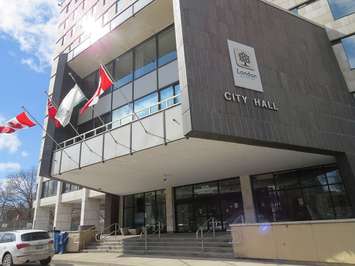
Property taxes in London are going up an average of 2.82% annually over the next four years.
Council rubber stamped the city's first ever multi-year budget Thursday. The newly approved 2016-2019 budget means an increase of approximately $76 a year for the average homeowner, on homes assessed at $221,000.
Mayor Matt Brown calls the city's fiscal blueprint both responsible and sustainable.
"We kept the increase as close to inflation as possible. I think if you ask some of our community partners like the Chamber of Commerce, they'll also say they are happy with this increase," says Brown. "What we didn't do here was make short term decisions that might raid the reserves or keep taxes low over a short period of time and then create a budget bomb in future years."
The multi-year budget includes $3.8-million to combat homelessness, $2.1-million for poverty reduction, $15.6-million to convert a section of Dundas St. into a "flex-street", $10.2-million for two new libraries and a southeast fire hall, and $30.8-million for new transit buses.
Brown says the new multi-year budget process proved to be a success.
"It went as smoothly as we can possibly expect. It's the first time the city of London has embark upon a multi-year budget process, we're one of the very first communities here in Canada to have do this. What it does is allows us to plan for the short term but also the medium and the long term," says Brown.
Councillor Josh Morgan, who was named the mayor's special budget advisor, admits there are a number of Londoners who may find the tax increase tough to manage.
"There are families in this city where even another $10 a year is stretching a budget. It's a tough thing to deal with as a councillor, we have to move this city forward, we have to invest in our infrastructure, and at the same time this budget invests in those who are most vulnerable ," says Morgan. "For those may not be able to afford even small increases, we are trying to invest in them in other ways to help lift them out of poverty and put them in a better financial place."
Morgan says the new multi-year budget process forced council to be more aware how changes made one year effect future years.
"You can't push things down the road without seeing the implications of it. It's quite the advantage to budget in this way," says Morgan. "If you're going to push something off from 2016 to 2017 it's still on our graph, it's still in our budget, if you push it two years down the road it is still in our budget. We've always done projections but this is actual consequences to those decisions."
During the two and a half month budget process, Londoners weighed in through build-a-budget workshops, public participation meetings, online through the budget simulator, and via Twitter with 721 tweets using the hashtag #LdnBUDGET.
The budget is not set in stone for 2017-2019. The city will hold an annual update process where council will be able to adjust the budget for special events or circumstances.