

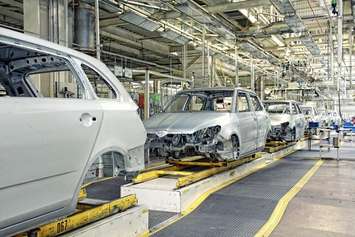
Auto workers in the London region breathed a big sigh of relief as word spread of a new trade agreement between Canada, the United States, and Mexico on Monday.
The trilateral deal, dubbed the United States, Mexico, Canada Agreement (USMCA), was reached late Sunday and replaces the North American Free Trade Agreement (NAFTA).
"It's fantastic news for the auto industry and the parts industry. There is a big sigh of relief," said Mike Van Boekel, chairperson of Unifor Local 88 representing Cami employees. "Hopefully it means job security for a long time."
Throughout the 14 months of negotiations, U.S. President Donald Trump had threatened to place a 25 per cent tariff on vehicles and auto parts being shipped from Canada into America if a deal was not reached.
"I honestly believe it would have been the end of auto in Canada," said Van Boekel. "We couldn't compete. 91 per cent of new vehicles made in Canada do get exported to the United States, that is just the way it is. We don't have enough population compared to the US so it would have absolutely shut us down."
The new deal helps to level the playing field when it comes to jobs going to low-wage earners in Mexico, with a stipulation that 40 to 45 per cent of auto parts and vehicles from that country be made by workers earning at least $16 U.S an hour. A higher export cap of 2.6 million was also placed on the number of Canada-made vehicles shipped to the U.S.
"Right now we are producing well under 2 million vehicles a year in Canada, that is all the companies combined and now I know they have made the agreement to go to 2.6 million, so there is lots of room for expansion in Canada," said Van Boekel. "Obviously we are still competing with Mexico and the southern states, but at least the ceiling has been increased dramatically. Hopefully, that will lure some investment."
The Cami Assembly plant in Ingersoll employs roughly 3,000 people and there are another 4,000 workers in the London region who are employed by the auto parts sector.