

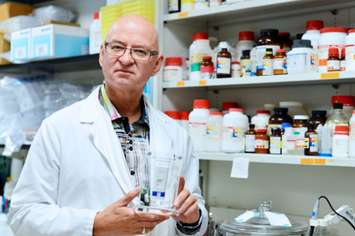
Researchers at Western University have developed a new way to detect E.coli in food long before it hits grocery store shelves.
The new rapid testing kit detects E. coli 0157, the same food-borne bacteria causing the current outbreak in the US and Canada that has prompted a warning from health officials to avoid eating romaine lettuce. Unlike the current testing method, which takes days to generate results, the new test produces results in just hours.
The kit has already received approval for commercial use from Health Canada.
“Our goal is to get the testing to occur as close as possible to the source,” said Dr. Michael Rieder, a professor at Western’s Schulich School of Medicine & Dentistry and scientist at Robarts Research Institute. “This technology is not only faster, but it’s less expensive, it’s easy to use, and it can occur right in the processing plant.”
The Western-developed kit looks for a protein that is unique to the pathogenic E. coli bacteria and, much like a pregnancy test, shows one line for negative and two lines for positive results. The technology allows for results in under 24 hours. That is in stark contrast to the current food testing method that relies on culture samples to be sent away for testing, a process that can take up to two weeks. Often times, when those results come in the food has already been shipped to stores, leading to a large recall.
“The goal is a safer food chain for everyone so that public safety can be assured," said Rieder.
The kit is currently making its way into food processing plants in North America, following first lot production of the device this past summer.