

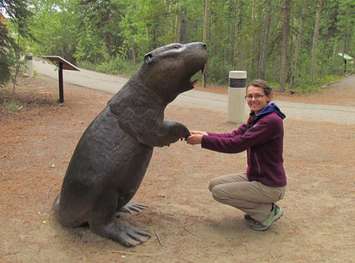
The extinction of the giant beaver during the last ice age was likely due to its diet, according to a new study out of Western University.
Researchers examining the prehistoric rodent found that unlike its much smaller relative, the North American beaver, the giant beaver did not eat wood. Instead the animals, which weighed approximately 220 lbs, ate underwater plants and that made them highly dependent on wetlands.
“We did not find any evidence that the giant beaver cut down trees or ate trees for food,” former Western student Tessa Plint said in a statement. “Giant beavers were not ‘ecosystem-engineers’ the way that the North American beaver is.”
Western earth scientists used chemical tracers in the giant beavers' fossilized bones and teeth to determine their diet.
Beavers and giant beavers co-existed for tens of thousands of years in North America before the last ice age or Last Glacial Maximum, as it is scientifically known. At the end of the deep freeze the ice sheets retreated and the climate became much drier, spelling the end for the giant rodent.
“The ability to build dams and lodges may have actually given beavers a competitive advantage over giant beavers because it could alter the landscape to create suitable wetland habitat where required. Giant beavers couldn’t do this,” said study co-author Fred Longstaffe, Western's Canada Research Chair in Stable Isotope Science. “When you look at the fossil record from the last million years, you repeatedly see regional giant beaver populations disappear with the onset of more arid climatic conditions.”
The study was recently published in the journal of Scientific Reports – Nature.