Researchers in London have made a discovery that could greatly assist in the treatment of people with COVID-19.
The team of researchers from the Lawson Health Research Institute and Western University has profiled the body's immune response to the illness and, according to the LHRI, is the first in the world to do so.
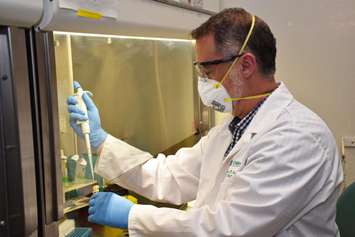
The researchers studied blood samples from 30 people, including 10 COVID-19 patients and 10 patients with other infections who were admitted to the Intensive Care Unit at the London Health Sciences Centre, as well as 10 healthy people who were part of a control group. The researchers were able to identify a unique pattern of six molecules, a discovery that could allow for targeted treatment. According to a news release from the Institute, the immune system can overreact to the virus and cause elevated levels of inflammatory molecules that damage healthy cells. The researchers' findings could help develop better treatments for COVID-19.
“Clinicians have been trying to address this hyperinflammation but without evidence of what to target,” said Dr. Douglas Fraser, lead researcher from Lawson and Western’s Schulich School of Medicine and Dentistry and Critical Care Physician at LHSC. “Our study takes away the guessing by identifying potential therapeutic targets for the first time.”
Fifty-seven inflammatory molecules were studied by the researchers. They found that "inflammation profiling" was able to predict the presence of COVID-19 in critically ill patients with 98 per cent accuracy.
"Understanding the immune response is paramount to finding the best treatments,” said Dr. Fraser “Our next step is to test drugs that block the harmful effects of several of these molecules while still allowing the immune system to fight the virus.”
The study was published in Critical Care Explorations.