

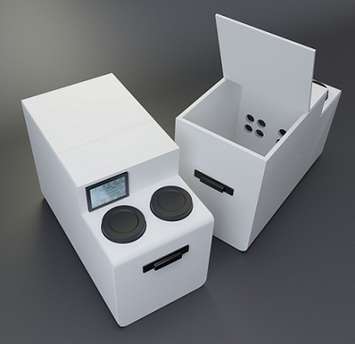
For the first time in nearly 60 years, there is a new and more efficient way to transport vital organs and other temperature sensitive medical items.
Western University researchers have designed and developed a new portable temperature regulating device to move human organs and vaccines.
“It is 2020 and yet we are still transporting vaccines and organs in devices using primitive cooling methods like ice packs or ice cubes, with no control,” said Project Lead and Western Engineering Professor Kamran Siddiqui.
Up until now, the traditional organ storage and transportation system, which has been used since the 1960s was not equipped with controls. As a result it is difficult to sustain a fixed temperature.
The new medical transport box is made of "phase change materials" which can release and absorb sufficient energy during transport to maintain a constant temperature independent of the surrounding temperatures for an extended period of time. The device does not require an external electrical source and can be controlled and monitored remotely.
Siddiqui noted the new battery-powered box could also prove vital once a vaccine is developed for COVID-19.
"“The need for safe transportation has never been more evident than today as the global COVID-19 pandemic affects all of our lives. Our technology is very promising and has already attracted international interest,” said Siddiqui, who developed the device with Steven Jevnikar, a research associate at Lawson Health Research Institute.
Temperature requirements for vaccine transport are quite narrow.
"Our device may be one of the only options available to meet the strict criteria for worldwide vaccine transport,” Jevnikar added.
In addition to serving the needs of the medical community, the London-developed box could prove useful in the restaurant and retail grocery industries. The box can be set to maintain a hot temperature, as well as cold, making it effective for businesses-to-consumer food transport.
The project was a collaboration between Western Engineering, the Schulich School of Medicine and Dentistry, the Lawson Health Research Institute and London Health Sciences Centre's Centre Multi Organ Transplant Program.