
Canada's agriculture industry is preparing for potential disruption as U.S. President-elect Donald Trump proposes a 25% tariff on imports from Canada and Mexico, citing border security concerns.
With billions of dollars in agricultural trade at risk, the move could severely impact exports of pork, beef, grain, and other key Midwestern Ontario commodities that are heavily reliant on cross-border trade. The tariff proposal has reignited concerns for Canada's supply-managed sectors, which have historically faced challenges whenever trade agreements like the USMCA (United States-Mexico-Canada Agreement) are revisited. Aaron Martin, General Manager of the Stratford Chamber of Commerce, emphasized the precarious position these industries could face if quotas are targeted.
“Every time NAFTA, or the USMCA as it's now called, is opened up, that can sometimes hit on quota, which can be detrimental to chicken and dairy operations, so a lot of them are waiting to see what happens along those lines,” he said.
The ripple effects of tariffs could also extend beyond exports. Martin noted that Canada’s weaker dollar has been advantageous for selling agricultural commodities at competitive prices on international markets. However, counter-tariffs could upset this balance.
“If we have counter-tariffs, that can hurt things like equipment coming this way, or some of our inputs. If we’re buying everything on the international market, the fertilizer prices might go up, so that can bring up our cost of production,” Martin explained.
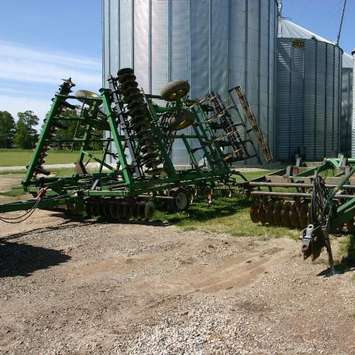
Equipment trade, in particular, could face challenges. The weaker Canadian dollar often makes used equipment attractive to American buyers, but reciprocal tariffs could complicate these transactions, forcing producers to invest in more expensive new equipment.
“With our equipment, a lot of our used equipment...when we have a weaker dollar, that goes stateside as well,” Martin said. "If we have a lower dollar or higher tariffs, because we have reciprocating tariffs, that could be an issue as well."
Midwestern Ontario's agricultural sector is bracing for uncertainty in the months ahead. Stakeholders hope that efforts and the integrated nature of trade between Canada and the U.S. will help minimize the impact, but the possibility of a tariff-driven trade war remains a concern.