

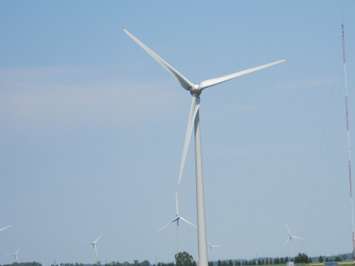
A radar study by the US fish and Wildlife Service finds that turbines near the Great Lakes pose a high risk to migratory birds, bats and other wildlife.
In fact, the American Bird Conservancy says the study proves the no turbine zone should extend about 16 kilometres inland.
The radar studies were conducted in 2013, and included four sites along Lake Ontario.
The results released this summer show radar recorded high levels of bird and bat activity.
Study authors reported, "The importance of shoreline areas, as revealed by our study, highlight the need to avoid these areas as migration corridors as recommended in the Service’s Land-Based Wind Energy Guidelines "
The Bird Conservancy suggests that millions of birds use the migratory corridors on the Great Lakes, mainly flying in the rotor swept zone.
Results of a radar bird survey conducted in Huron County a few years ago have not been made public.
You can find the US Fish and Wildlife study here: https://www.fws.gov/radar/documents/Avian%20Radar%20Sp2013%20Ontario%20Full.pdf