
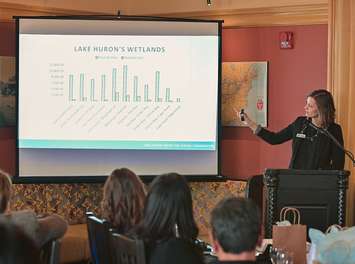
A coastal stewardship coordinator with the Lake Huron Centre for Coastal Conservation says their coastal action plan is having some impact along the Sarnia to Tobermory shoreline.
Daniela Klicper said the action plan looks specifically at the coastal corridor, which is one to four kilometres inland and out to a water depth of six metres. Nine different ecosystems can be found along that shoreline, and some municipalities have two or three in their part of the shoreline.
Klicper said many of the problems along the shoreline are the result of human activity and that could be on beaches and dunes, or it could be in wetlands. Riding four-wheelers on wetlands is one of the most destructive activities.
Another stresser is "nutrient loading" coming into the lake. Klicper said agriculture is one source of that nutrient but she adds there are several other sources.
Another major issue that isn't a result of human activity is an invasive species. One of the Coastal Centre's programs deals with Phragmites or the Common Reed and that's found in most of their ecosystems along the Sarnia to Tobermory shoreline.
She said Phragmites are progressing further north and they are trying to prevent them from spreading any further.
Klicper said they need help from governments and communities to address the issues, and she believes it requires equal amounts of funding and awareness.