

Listowel Wingham Hospital Alliance President, Karl Ellis, was part of a delegation that made a presentation to North Perth Council this week.
Ellis says the presentation, put together by Jan McKague-Weishar, focused on physician recruitment efforts, and issues related to staffing challenges at the hospitals.
"We're smaller hospitals and have a smaller staffing pool, so when we have staff off on leave, it's hard to back-fill and replace them. So we've had some sick leaves and quite a number of maternity leaves across both of our hospitals. That's a good news story, we have many staff that are raising their families and working in our community, but it's also causing us some challenges in trying to keep staffing," Ellis explained.
Ellis says there are efforts being made to bring in medical students to help fill some needs.
"So we have 13 young people between Listowel and Wingham that are in nursing school right now that have essentially summer jobs. When they go back to school, they'll have weekend jobs with us, and obviously we're hoping that when they graduate they choose Listowel or Wingham as a place to practice," Ellis enthused.
Also, while he thinks it's great to open up more spaces for students to become medical professionals in the province, Ellis says it won't help with staffing issues now.
"To train as a physician, you're looking at 4 years of medical school and a t least 2 years of residency, so any of those announcements today are 6 years away from having new physicians graduating out of those programs. Nursing is a 4 year university degree and then at least a year of work until you're comfortable in a rural setting. So those announcements are great, but we're a few years away from seeing the outcome of those programs," noted Ellis.
In regards to staffing issues in rural communities, more than just sheer numbers need to be considered in the future. Ellis points out, we need to ensure our communities are open, inclusive and welcoming to many people with many diverse backgrounds who are entering the field as students and graduates.
"People are coming from outside of our communities to live and work here. We need to be open and welcoming to what's frankly a diverse population of people that are being trained and working in these jobs. So that's an important consideration for our communities," Ellis concluded.
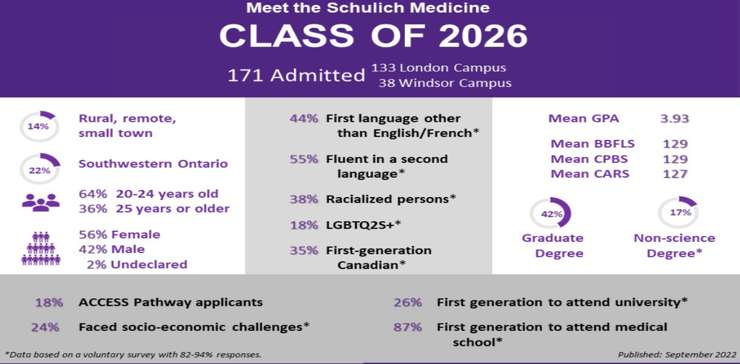
Ellis notes that a slide in their presentation to council showed that 38 percent of nursing students in the Schulich Medicine class of 2026 are racialized persons, 18 percent are part of the LGBTQ community, and 35 percent are first generation Canadians.