
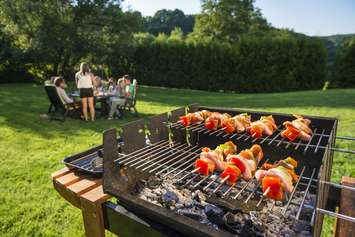
With summer well underway and many people taking advantage of the weather to have get-togethers, Huron Perth Public Health wants to ensure everyone is preparing food safely.
Chris Boyes of HPPH says if food isn't prepared or stored properly, it can lead to very unpleasant and even deadly sickness.
"Especially for those elderly folks or the very young. Pregnant people, or any type of immune condition can certainly leave someone susceptible to food-borne illness," Boyes shared.
Boyes says you should always remember some simple rules.
"Cook, clean, separate, chill. So we wanna make sure we're cooking our meat to the right temperature. Once it's cooked to the right temperature, you wanna make sure that you are keeping everything clean and making sure that surfaces are sanitized," added Boyes.
For meat temperatures, use a probe thermometer to ensure that your meat is ready.
It's also important to remember, as Boyes says, to make sure you separate food to be cooked from other foods that won't be, as well as anything that isn't food.
"You wanna keep any raw meat away from things that aren't gonna be cooked. You don't wanna put a bunch of raw burgers in a cooler with canned beverages, for example, because you could contaminate all the cans," Boyes said.
More information can be found on the food safety section of the HPPH website. You can see that here: www.hpph.ca/foodsafety
Common symptoms of food-borne illness include stomach pain or cramps, nausea, vomiting, and diarrhea. Some tips for handling and serving food safely to avoid food-borne illness include:
Clean
Wash hands before preparing and eating food. Use soap and water if available, or hand sanitizer containing at least 70 percent alcohol.
Wash vegetables and fruits under running water that is safe to drink.
Clean and sanitize counters, cutting boards, and food preparation utensils.
Cook
Thoroughly cook and reheat food to the proper internal temperature. Use a probe thermometer to check the temperature.
When serving hot foods, keep them above 60°C (140 F) by placing them on the grill, or in heated chafing dishes, a slow cooker, or warming trays.
Chill
Keep cold foods at 4°C (40 F) or below by placing them in a refrigerator, cooler, insulated container, or over ice.
Pack perishables safely when transporting food for a beach day, camping trip, tournament, or outdoor gathering. Use a cooler with multiple ice packs or bags of ice.
Never defrost or marinate food at room temperature.
Separate
Keep raw meat, poultry, seafood and their juices separate from cooked and ready to eat food during storage and preparation to prevent cross contamination.
Keep food out of the temperature danger zone
The danger zone is between 4°C and 60°C (40°F to 140°F). Harmful bacteria can multiply quickly in this temperature range. Perishable foods that are left sitting out for more than two hours (or one hour on hot summer days) are unsafe to eat and should be thrown out.