

Those planning to build in Petrolia later this year may face development charges after the town passed a new bylaw, which will come into effect on August 1.
The bylaw will apply to all new residential and non-residential developments to help pay for increased capital costs related to municipal services including fire, parks and recreation, as well as public works.
B. M. Ross and Associates Limited was contracted over a year ago for a development charges study. Following various consultations, council passed a bylaw on February 20.
CAO and Treasurer Rick Charlebois said like many municipalities across Canada, the Town of Petrolia is facing a housing crisis.
"We have a lot of potential development happening in the town over the next five, 10, 20 years and now's the time to get development charges in," he said. "[As noted in the study] we need to upsize the watermain, the main pipe that goes down Petrolia Line and then hangs south down Oil Heritage [Road] which is about a $3 million project. So we need to have that done before a bunch of development in the east end can occur. Development charges will help pay for the cost of that as opposed to the current residents."
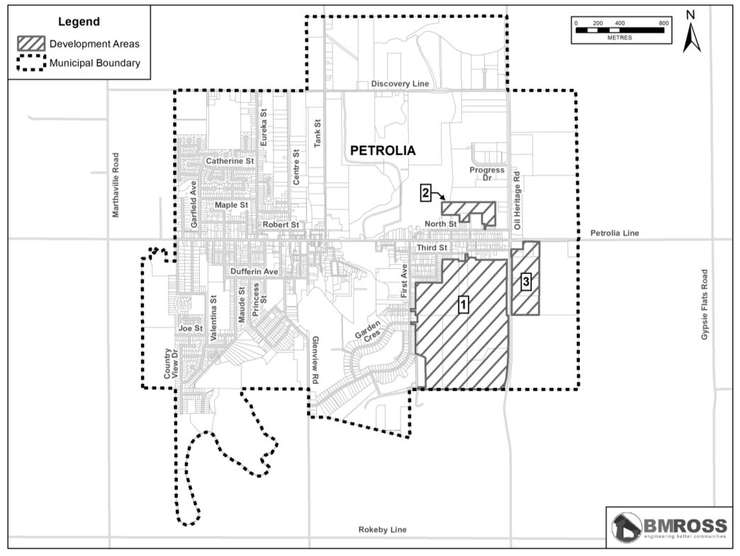
Three development areas have been identified as part of the study, each with unique infrastructure needs for their area, hence the difference in charges.
"One of those three development areas is a commercial area and it's different, it's based on square footage where residential is based on the type of home," Charlebois said.
As specified in the bylaw, development charges for single and semi-detached homes would be upwards of $10,000 in Development Area 1 (east of First Avenue and south of Third Street) whereas fees for apartments would be over $5,000.
While development charges are new in Petrolia, they are common in other municipalities, including the City of Sarnia which adopted its new bylaw in January.
"Over 80 per cent of municipalities that have more than 5,000 people, have development charges," Charlebois said.
As specified during a past council meeting, staff will apply for capital grants that may reduce the cost of some infrastructure projects under the bylaw.
It was recommended that staff conduct another development charges study in 2026 or 2027.