

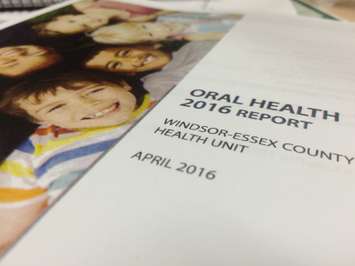
It's the first oral health report of its kind in Windsor-Essex and the findings aren't good.
The 2016 Oral Health Report shows oral health is poor in the region compared to provincial averages and health indicators aren't pointing to positive trends.
One of the more notable statistics in the report shows a 122% increase in the number of children eligible for topical fluoride treatment from 2011 to 2015.
Windsor City Councillor and Board of Health member Bill Marra finds the spike alarming, but also notes income was highlighted as an oral health indicator.
"It's very often that there isn't a singular causal factor, that it's a number of issues that could compound the situation," says Marra. "I think poverty is something that should be discussed. I'm glad it was raised. We have a serious poverty problem in this region."
The report shows generally those with less money have worse outcomes and those with more money have better outcomes.
Officials with the Windsor-Essex County Health Unit also stressed the report is a baseline of data and not an investigation into the merits of water fluoridation.
Marra — who was among those councillors voted to remove fluoride from the city's drinking water in early 2013 — would support a study specifically investigating the impacts of fluoridating drinking water.
"There should be a study," says Marra. "There were a number of us including myself who said, 'If there are any implications that came out of this decision, that we should give it a serious look.'"
The health unit is currently looking at the feasibility of conducting a study into the impacts of water fluoridation and hopes a full report would be complete by the end of 2017.