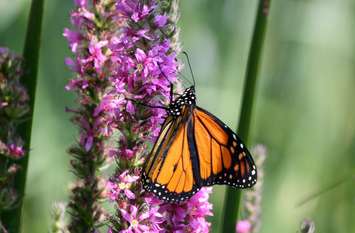
The Canadian Wildlife Federation is calling on Canada to step up efforts to restore Monarch Butterfly habitats just as populations in Mexico appear to be improving.
A long-term pattern of decline started in the 1990s, and in 2016, the butterfly was being assessed by the Committee on the Status of Endangered Species in Canada.
"The latest assessments in Mexico show that 14 colonies of overwintering butterflies occupied a total area of 6.05 hectares of oyamel fir forest," said Carolyn Callaghan. "This is a 144 per cent increase over the 2018 result and the highest area recorded since 2006."
 Monarch butterflies are set free into a garden as part of the 15th annual Butterfly Release Memorial for infant loss held in Leamington on June 22, 2016. (Photo by Ricardo Veneza)
The federation believes favourable weather conditions across the eastern range last spring, summer, and fall, along with extensive efforts across the U.S. to restore milkweed and nectar plants helped.
"This is a much-needed and promising result indicating the Monarch did have the good year that many of us observed in southern Canada," said Callaghan.
A study showed the significant percentage of the Monarchs in Mexico came from southern Canada, including Essex County where large numbers summer in the south part of the region.
"Millions of hectares of Monarch habitat has been lost in recent decades due to increases in herbicide use, changes in agriculture, and other development. If positive Monarch population trends are to continue, then Canada needs to do its part in improving Monarch habitat," continued Callaghan.
Unfortunately, in contrast to the eastern population, the smaller western migratory population did not fare as well. It shrank by 86 per cent from the already record low in 2017. Wildfires and droughts along the westerly migratory path may have impacted those populations.