
The Windsor-Essex County Health Unit says multiple community partners are making a difference in the opioid crisis.
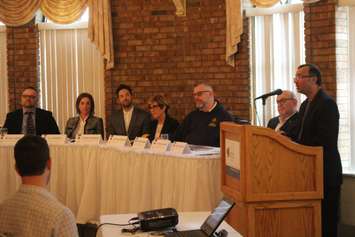
The health unit presented its first annual report on its opioid strategy at a media event Friday afternoon at the Fogolar Furlan Club in Windsor. The session was attended by representatives of government, health care, law enforcement and mental health. The report comes out with the launch of a new website dedicated to the opioid and substance strategy.
Dr. Wajid Ahmed, chief medical officer of health for the WECHU, said that a total of 28 different entities are involved in this community strategy and he is grateful to see the enthusiasm being put into it.
"It's good to see that we have made strong collaboration with many of the community agencies, in coming together to find a potential solution to the problem," said Ahmed. "We have addressed many of the issues but there's still a lot of work that needs to be done."
Four broad themes have been described in this report. The first, prevention and education, focuses on the efforts to teach students about the dangers of drug use in all of Windsor-Essex's publicly-financed school boards. The second, harm reduction, involves the number of needle drop boxes in the city of Windsor being raised to eleven, along with 15 community agencies whose personnel are now trained in handling and giving naloxone to clients.
The 16 groups trained on client screening make up a big part of the third theme, treatment and recovery, where a "Roadmap to Recovery" resource is available to over 300 health care professionals in helping those who want treatment. The fourth and final theme is enforcement and justice, with community resource officers from Windsor police, LaSalle police and the OPP supporting the Good Samaritan Drug Overdose Act, which protects those who help someone having an overdose from criminal charges.
The new website outlines each of these themes in detail, and Dr. Ahmed said every effort is made to ensure opioid deaths are kept under control and lowered with these themes being applied.
"We want to save every life," said Ahmed. "These are all preventable deaths. We definitely want to work closely with all our first-responders, all our health care providers to get onto it and try to find solutions, so that people don't pick up the drugs in the first place."
The complete report from the health unit is available on the new website.