
The local conservation authority is outlining its priorities for the upcoming year.
The Essex Region Conservation Authority (ERCA) has released its outlines for 2020 which includes plans to monitor and reduce phosphorous, flighting blue-green algae, working to address flooding and erosion as well as completing a significant restoration project on Pêche Island
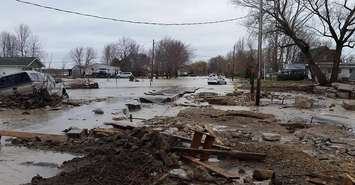
ERCA’s General Manager Richard Wyma said the organization recognizes that the last decade has brought some tremendous impacts to the region's landscapes, including more frequent storms and rising lake levels.
“These changes affect every part of our lives. While efforts to slow this change must continue, we also need to help our region adapt to its impacts," Wyma said. "To most efficiently and effectively undertake and advance this, we need to work together to improve knowledge and advance the understanding of climate change, identify risks and vulnerabilities, enhance regional preparedness, gaps in knowledge, policy and programming related to terrestrial, aquatic and nearshore systems, infrastructure, water quality and quantity, agriculture and communities in the Essex Region.”
For 2020, ERCA has identified a variety of programs to assist municipalities in protecting residents and infrastructure from the dangers of flooding and erosion as well as plans to increase habitat and forest cover, maintain and expand conservation areas and trails. The 2020 Budget to support these programs totals $10,576,317, which includes a total levy contribution of $3,386,667. This represents an increase of $148,000, or 49 cents per person. Wyma said the proposed levy increase is primarily to offset 2019 reductions in provincial funding for flood forecasting and costs associated with human resources.
“With changes to government priorities and associated funding cuts, it is harder to support key programs with external support. These are programs funded by levy in other conservation authorities,” he said. “The proposed budget is only enough to maintain the ‘status quo.’ Despite our efforts, we need to do more to improve the health of our watersheds, keep beaches open more, deal more effectively with phosphorous and blue-green algae in our lakes and to restore more wetlands, forests and habitats. These are essential for sustainable communities to build resilience to climate change, and importantly, attract and retain the talent this region needs.”
According to a press release, ERCA's operational levy funds less than 40 per cent of its operations, placing ERCA in the bottom five of all conservation authorities and well below the provincial average, which is approximately 50 per cent.
“The expertise that ERCA provides is a cost-effective way to manage regional environmental priorities,” said Tania Jobin, ERCA’s vice-chair. “Uniquely, ERCA provides a significant return on investment in addition to the programs and services that we provide to all of our municipal partners.”
This coming year, ERCA also intends to develop a new five-year sustainability plan to support initiatives identified in the Strategic Plan and the required resources to meet the needs of the region’s watersheds and municipalities.