
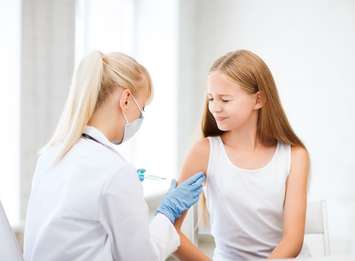
With vaccination rates among people aged 5 to 11 still below 50 per cent in Windsor-Essex, leaders in healthcare are once again urging parents to have their children vaccinated.
To date, only 43 per cent of children aged 5 to 11 in the community have gotten their first dose and only 18.6 per cent have had a second dose. Among those 12 and older, 89.5 per cent have had the first dose and 87.2 are fully vaccinated.
Local health officials say it is not uncommon for parents to have some hesitancy when new vaccines are approved.
“We know for sure that for the most part, these are parents who are most likely I will use the term sitting on the fence because they recognize the benefit of the vaccine for themselves and they just need to be nudged and educated and reassured about the importance of and the safety of the vaccine,” said President of the Essex County Medical Society Dr. Vikesh Maraj.
According to Health Canada, there have been 226 non-serious incidents reported among children 5 to 11 after receiving a dose of the Pfizer BioNTech vaccine.
Serious side effects after receiving the COVID-19 vaccine, such as allergic reactions, are extremely rare. As with any vaccine, there may be mild side effects felt within a few days of receiving the vaccine. These may include redness, soreness, or swelling at the injection site, mild fever, headache, tiredness, muscle and joint pain, and chills. Side effects usually mean that the vaccine is working to stimulate your immune system.
In an open letter to the community, the health unit and other health care professionals are asking parents to talk to a trusted family doctor about their concerns regarding the vaccine and COVID-19.
“I think initially there were some thoughts about COVID not affecting the younger population as much as the older population and the science absolutely does not support that theory especially with the Omicron variant,” said Dr. Maraj.
COVID-19 vaccination is available for children 5-11 years of age and all eligible residents at participating local pharmacies, through participating healthcare providers, at pop-up vaccination clinics throughout the region, and at the local mass vaccination sites.