
UPDATE: Chatham-Kent councillors voted to in favour of the recommendations Monday night.
Some changes could be on the way to Chatham-Kent's long grass and weeds by-law that would allow some degree of environmental naturalization on private property.
Administration has prepared a draft by-law that council will be voting on Monday evening.
In September 2020, council approved a motion that requested staff to look at ways the current by-law could be altered so that it maintains its initial intent while still recognizing the community benefits achieved through appropriate naturalization activities on private lands.
Naturalization is defined as "activities that return a portion of a private yard to a natural state using combinations of plants that are native to Chatham-Kent’s Carolinian eco-region."
According to the staff report going to council, Chatham-Kent's long grass and weeds by-law was originally implemented to ensure a minimum level of aesthetics throughout the community, prevent landscape abandonment and ensure that the municipality was aligned with the Ontario Weed Control Act.
"However, it is also a community strategic objective to enhance natural areas in the municipality and there is a conflict that exists with the long grass by-law in meeting these objectives," read the September 2020 motion. "Specifically, there are challenges that the current grass cutting by-law poses with respect to legitimate tall grass prairie environmental naturalization activities on private lands and despite the positive intent of the by-law, the way it is currently written can be used to reverse these environmental stewardship activities that the municipality has otherwise identified as desirable."
In March of 2021, the municipality held an online survey to gauge the public's opinions towards the concept of naturalization on private properties in general
According to the report, the municipality received an "overwhelming" public response, with over 450 people taking part in the survey.
"The majority of respondents voted in support of naturalization activities on private property, in both residential and agricultural areas," the report stated.
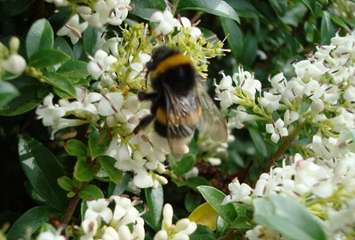
The most prominent themes appearing in comments from those in support of naturalization activities included various benefits to the environment such as reduced pesticide use, enhancements to pollinator habitats, increased water retention and protecting wildlife and endangered native plant species.
For those against naturalization activities, the most prominent themes included concerns about conventional aesthetics, unmanaged, unmaintained and abandoned yards, weeds, enforcement, and pests.
The survey also asked residents what options they would prefer to see for a by-law modification
"Over half of respondents voted in support of Option 2, to include a definition of acceptable naturalization activities and an exemption for naturalization activities in Chatham-Kent’s existing long grass and weed by-law," the report stated. "No permit would be required to complete naturalization projects and enforcement would be complaint-driven...Unmanaged, unmaintained or abandoned yards would continue to be prohibited and adherence to the Provincial Weed Control Act would continue to be required."
According to the report, this is the current approach used by the cities of London, Sarnia, and Windsor.
Other options included not changing anything and continuing to prohibit naturalization or introducing a permitting process where people would need to apply for a municipal permit before being authorized to naturalize portions of your property.
The summary of the recommended changes to the by-law are as follows:
Side and rear yards
In keeping with the aesthetic considerations that form the basis of the long grass and weeds by-law, the conversion of majority portions of a yard to naturalized areas are to be limited to the side and rear yards of properties and are not allowed on front yards. Naturalization activities on front yards may occur, but are to be limited to flower bed areas – which in this case is defined as a strip of land no wider than 1.5 meters that directly abuts a building.
Buffer strip
In order to reduce the risk that naturalization activities may encroach on adjacent properties, residents who undertake naturalization activities must maintain a 1 metre mowed and weed-free buffer strip between the naturalization project and the property lines of adjacent properties.
Rodents
Failure to control infestations that become established in naturalization projects will lead to enforcement and orders under the Chatham-Kent's clean and clear by-law, which states that "no owner shall fail to keep his or her land free and clear of infestation.” this may include eliminating the naturalization project and returning the area to mowed grass.
Burning of tall grass prairies
Tallgrass prairie naturalization projects will naturally lead to the accumulation and buildup of dead plant matter over time. One approach for eliminating the accumulation and buildup includes undertaking prescribed burnings. In order to eliminate the risks posed by the practice of prescribed burnings, the burning of tall grass prairies is strictly prohibited in all urban areas without exception. In urban areas, alternative methods that do not involve fire must be pursued. In rural residential and agricultural areas, any activities involving the prescribed burnings of build-up must conform to Chatham-Kent’s open-air burning by-law.
Under the proposed by-law, any municipal drains must be kept free of obstructions as well as any right-of-ways that could impact visibility for motorists and pedestrians.
According to the report, the by-law change is not expected to make a difference on the demands of by-law enforcement, but municipal staff will closely monitor any impact and report back to council if demand for enforcement changes substantially.