
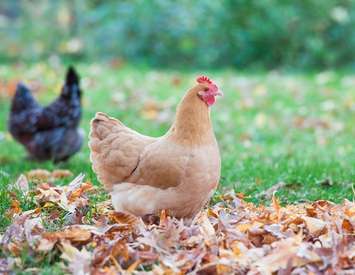
A recent online survey to get feedback on backyard chickens across Chatham-Kent garnered nearly 5,000 responses.
The survey showed 68.4 per cent of the participants are in favour of backyard chickens, but only 45 per cent were interested in having chickens.
The data also showed that a third of the respondents want no more than six chickens, 27 per cent want up to four, and 17.5 per cent want no more than two chickens.
The municipality also noted 4,007 of the survey participants (80%) were from urban areas, adding that almost half of the total participants (2,178) said they want fresh eggs for their household, while 1,165 said they want to eat chicken they've raised themselves, and 1,056 said they believe chickens are a fun and educational opportunity. Other reasons for keeping chickens in a backyard, include being interested in chickens as pets and wanting to sell the eggs.
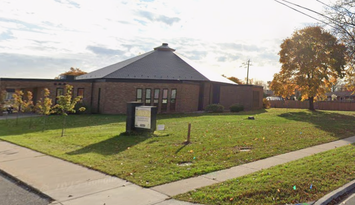
The municipality is hosting a public meeting to talk about backyard chickens on Thursday, June 29, 2023 at 6 p.m. at St. Mary’s Hall at 94 George Street in Blenheim.
The June public meeting is an opportunity to discuss the detailed survey results from March and April and the information report going to council on July 10, 2023, according to Chatham-Kent's Manager of Licensing Services Nancy Havens.
Concerns stated in the survey about keeping backyard chickens ranged from none (2,009 responses), to smell, and sanitary/health reasons. Other concerns, include attracting predatory wildlife and/or rodents, noise, roaming of chickens, coops being unsightly, and lowering property values/appearance.
Survey participants want cleanliness standards, mandatory fenced yards or enclosed runs, and hens only - no roosters guidelines, if the municipality goes ahead with backyard chickens. Other considerations that are important to the participants are the size of coops and run areas, distance and visibility from other houses, where the chickens are contained within the yard and the licencing or registration of chickens.
The Kent Federation of Agriculture opposes backyard chickens in Chatham-Kent because it hurts egg farmers and chicken farmers and because avian influenza poses "a very real risk" to our food supply.
"It has been proven that contamination of commercial flocks originates in urban areas. When avian flu is detected in a commercial flock, that flock must be euthanized, the facilities thoroughly cleaned and disinfected, and a withdrawal period must be observed. The result is crippling to that farmer - the financial, mental and emotional stress that accompanies this situation can be devastating," wrote President of the Kent Federation of Agriculture Brad Snobelen in a letter to council. "Avian influenza has already been found – in fact, the first detection in Ontario in 2023 was in a backyard flock located right here in Chatham-Kent. Commercial farmers need help from the council to control this outbreak and help protect the food supply for all Ontarians."
Almost all of the surrounding municipalities don't allow backyard chickens.
Chatham-Kent Public Health does not endorse backyard chickens because of the elevated risk of transmission of infectious diseases posed by the birds in urban settings.
The public health unit also said backyard chickens would not address community food security and food insecurity because they are not accessible to all. CK public health officials said only households with adequate income can keep chickens in the backyard because it takes money to start a backyard flock and maintain it, adding that not all residents have a suitable backyard to raise chickens.
The municipality said deputations regarding backyard chickens won't be allowed at the July council meeting because a public meeting is being held beforehand to address the issue.
Comments or questions regarding backyard chickens not already addressed in the report or survey results will only be allowed at the June public meeting and the information will be provided to council.