
A team of London researchers has come up with a way to cut in half the number of opioid prescriptions given to patients after general surgery, without leaving them with increased pain.
The study by Lawson Health Research Institute and Western University used a new clinical protocol, dubbed standardization of outpatient procedure (STOP) narcotics, that focuses on non-opioid pain control and patient and health care provider education.
“By significantly reducing the amount of opioids prescribed, this decreases the exposure risk and potential for misuse of narcotic medication,” said study co-author Dr. Luke Hartford, a resident in general surgery at Western’s Schulich School of Medicine & Dentistry. “This also decreases excess medication available to be diverted to individuals for whom it was not intended.”
The study involved 416 patients who underwent laparoscopic cholecystectomy or open hernia repair at the London Health Sciences Centre and St. Joseph’s Health Care London. Roughly half of the patients were treated using the new clinical protocol, while the other half continued to use the existing pain management procedure.
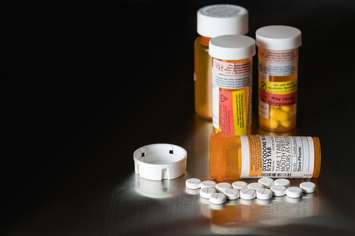
The new practice saw patients given acetaminophen (Tylenol) and a non-steroidal anti-inflammatory drug for the first 72 hours after their surgery. Doctors treating patients under the new protocol were instructed to write just a ten opioid pill prescription, which would expire seven days after the surgery. Patients were then told to only fill the prescription if they couldn't manage their pain using the other drugs.
“We recognized that before STOP Narcotics, every surgeon had a different approach to pain control, and that most surgeons were prescribing more narcotics than are actually needed,” said Dr. Ken Leslie, chief of general surgery at London Health Sciences Centre and Lawson scientist. “When we looked at the data from this new protocol, we saw that the patient’s pain-control was just as good with this pathway, without a huge prescription for narcotics.”
Fewer than half of the patients treated using the new protocol filled their opioid prescriptions, compared to 95 per cent of patients using the traditional pain management method. By giving patients instructions on how to properly dispose of the unused medications, the study also saw appropriate disposal of leftover opioids rise to 23 per cent in the STOP Narcotics group. That was a drastic increase over the 7 per cent noted in the control group.
The level of post-surgery pain was said to be the same for both those treated using the new protocol and those in the control group.
The study was published in the Journal of the American College of Surgeons and the findings were presented at the American College of Surgeons Clinical Congress in Boston, Massachusetts on Wednesday.
Researchers now hope to expand the new protocol beyond general surgery to help patients manage pain following other procedures.
“If we can decrease the opioid exposure risk in our patients, and decrease the amount of excess medication available for diversion, and spread this to other institutions and surgical procedures and specialties, this has the potential to significantly impact the opioid crisis,” said Dr. Patrick Murphy, study co-author and a resident in general surgery at Schulich Medicine & Dentistry.