

A Huron County public health inspector has some advice for people considering summer activities like hiking that may take them into fields or forests where there is long grass.
Mike Park says the possibility of becoming ill from a bug bite in Huron County is relatively rare, but tick bites are becoming more common.
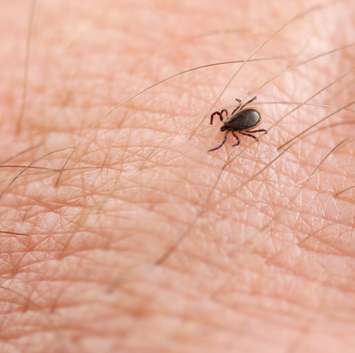
The blacklegged or deer tick can carry the virus that causes Lyme Disease.
Park suggests a number of precautions if you're going to be in long grass or in a wooded area including wearing long pants and light-coloured long-sleeved shirts, closed-toe shoes, and applying an insect repellent approved by Health Canada.
He also suggests doing a head to toe inspection for ticks at the end of the day. If a tick is found it should be removed by gripping as close to your skin as possible with a pair of tweezers and should be pulled out very slowly and firmly and placed into a plastic bag and taken to the health unit for testing.
He adds the tick has to be on a person's body for 24 hours to transfer the virus.
Early symptoms of Lyme Disease can include fever, headache, muscle and joint pain, fatigue, and an expanding rash that may resemble a bull’s eye.
The health unit will also start trapping mosquitoes this week to test for West Nile virus. Mike Park says they haven't found any positive pools for West Nile virus in several years but that doesn't mean it can be ruled out.
To get more information on Lyme Disease or West Nile virus visit the huronhealthunit.ca website.
 Mosquito trapping (BlackburnNews.com photo)