
Sarnia's police chief doesn't see any problem with a mayor or city councillor sitting at the helm of the police services board.
A Sarnia council sub-committee, comprised of councillors Cindy Scholten, Matt Mitro and Brian White, has recommended city councillors be excluded from serving as chair or vice-chair of the civilian body.
It also recommends term limits to avoid decisions being based solely on political considerations.
The sub-committee was formed earlier this year to provide input as the Community Safety and Correctional Services Ministry looks to rewrite the Ontario Police Services Act.
Chief Phil Nelson says the act dictates the size of boards and their composition according to population.
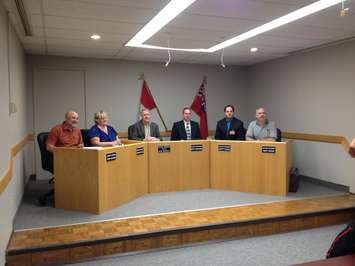
He says the Sarnia board includes the mayor, and two appointees each from city council and the province.
"The board meets every January and they elect a new chair and vice-chair and the board members, they've always voted the mayor back in as the board chair," says Nelson. "I really don't see what's the big issue about having him as board chair or vice-chair. No one individual member of the board makes a decision to direct me on things, it comes directly from the board itself, they all together become my boss."
The sub-committee also suggests moving away from hand-written reports to reduce costs but Chief Nelson says his officers seldom hand-write reports and haven't for some time.
"We've moved ahead generations in that, we're at a point, probably in the last five years where an officer can sit in his cruiser and just dictate his report into a databank and the civilian in direct entry completes all that for him," he says. "Other than taking statements and doing a few things, this is all done through dictaphone technology and we've been using that for some time."
The reforms to the Ontario Police Services Act, which are expected to address various issues including police misconduct, dealing with the mentally ill and the role of local police boards were originally expected to go before the legislature this spring.